
The Deep Awareness You Can Access Through TeamWork with Children Yoga in Primary Schools
‘Teamwork makes the dreamwork’ is a line that we use often in school in our children yoga classes to celebrate with children the value of working together towards a common goal. Whether we are looking at how to achieve our goals in Pshe or in January at our New Years’ resolutions, this line helps children to understand that together we are stronger and can achieve more than if we were on our own.
Why you would ask? The first obvious answer is that there is simply more people to complete the task or project.
However it is not just a simple linear calculation and even little children in last year of Infant school will point to the fact that we all have different skills and strengths. If a project requires a variety of skills, then the contributor with the best matched skill in a particular area stands the best chance of completing the task well. As a result we can show that the total sum of efforts rendered ends up being more than the sum of the individual efforts.
This adds up to a compounded effort and with this a sense of over achievement and perhaps satisfaction. Effort after all being the most rewarding and growth-creating element as it is effort that we praise if we follow the growth mindset that has been embraced in school over the last 6-7 years, per acclaimed author Carol Dweck in her book ‘Mindset’. By praising the effort rather than the result, children are encouraged to focus on keeping their effort up. Psychologist Stephen Grosz in his book ‘The Examined Life’ explains that he had specifically wished for his child’s carer in nursery to not praise the child’s drawings with empty lines (your drawing is amazing), but instead to always praise the effort and time the child took . Be willing to listen to your child when they explain what they did. It is the time and attention that you dedicate to them that will boost their self esteem and encourage them to do more.
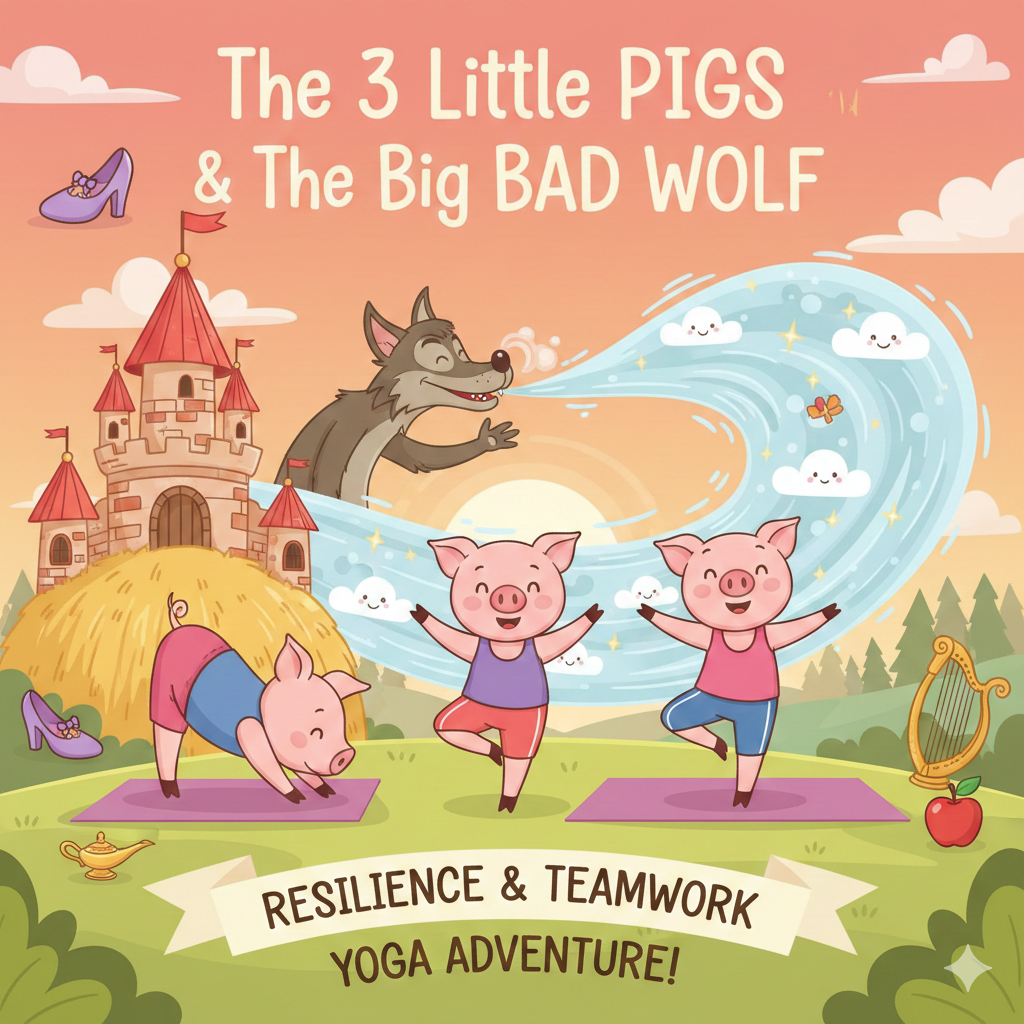
The use of stories in class is ideal to demonstrate the above concepts and we encourage reflection at the end of our practice to assimilate the learning from those stories and transfer learning to real life example.
Yoga is experiential and practising group balance poses can really bring tremendous lessons alive: when we are holding hands and practising group airplanes or group trees, it is a slow process that allow children to start to understand a number of concepts -beyond mindfulness, awareness and physicality – such as for instance
- Respect of differences
- Cause and effect
- Leadership skills
In particular if the specific objective is to stay balanced as a group, each element has a knock on effect on the total chain. Therefore it might be more useful to start slow and safe, giving ourselves and others time and space to adapt and adjust, rather than rushing into our best laborious and ephemeral balance. It also provides time to buffer others loss of balance. We become more resilient as a whole if we can support others as well as accept to be supported.
If grown-ups were not cringing at the news that ‘we are doing partner work today in yoga class’ I would urge you to try it out for yourself 🙂


Leave A Comment