
Neuroscientist Deb Dana, known for her work with Polyvagal Theory, describes oxytocin — often called the “bonding hormone” — as part of the ventral vagal system, the branch of our nervous system that supports safety, trust, and connection.
When children feel connected — when they are seen, supported, and included — their nervous system softens. Their bodies become more receptive, their breathing steadies, and their capacity for learning and empathy expands. This hormone is also the most alkaline hormone in the body making it an anti-inflammatory agent, boosting nervous system health, resilience and wholistic health.
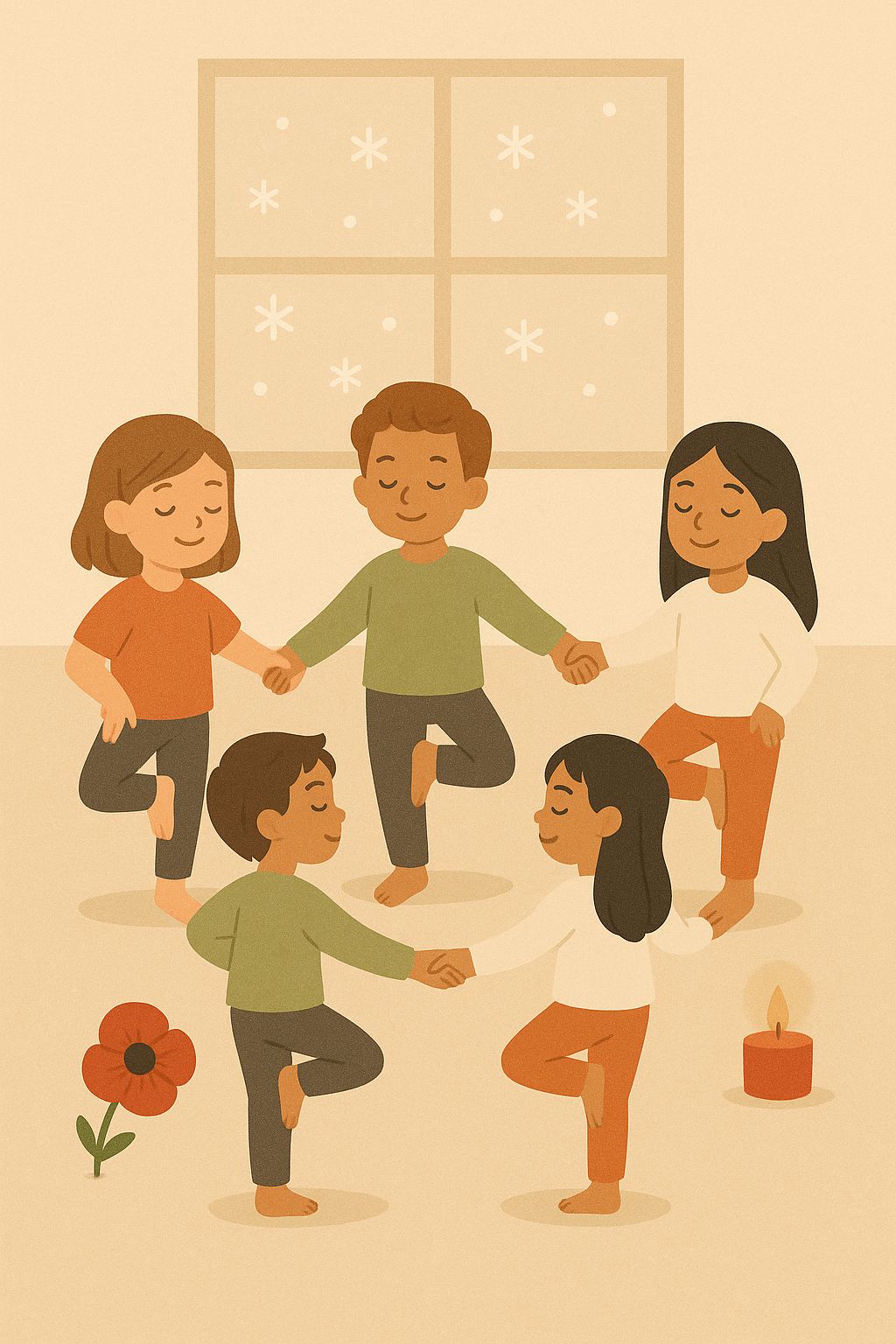
At Yogamoo, our current theme — Cooperation, Care, Community, and Connection — was designed with this in mind. Through group yoga practices, partner poses, and team-based activities, children are invited to experience connection not just emotionally, but physically.
When two children hold a partner balance, for instance, they learn to sense and respond. Each has to adjust — a little more steady here, a little more stretch there. This exchange is subtle, but powerful: it activates the same relational circuits in the brain that underlie empathy and cooperation.
Just as breathwork brings focus to the mind, moving and balancing together awakens social awareness in the body. These physical experiences cultivate interpersonal attunement — the ability to move in harmony with others — something every nervous system thrives on.
The hormone oxytocin plays a key role here. It is the biochemical signature of safety and trust — a quiet, invisible current that encourages openness, cooperation, and belonging. Studies increasingly show that oxytocin supports mental health resilience, not simply by reducing stress, but by building the protective web of human connection that buffers against it.
This half-term, our classes also bring in the spirit of Remembrance — an opportunity to talk about community, care, and the importance of standing together. As we explore these themes through stories, movement, and reflection, children begin to understand that wellbeing is relational: it grows between us, not just within us.
When a group of children practices yoga together — breathing in sync, balancing as one, laughing when they wobble — they are doing more than exercise. They are rehearsing what it means to belong.
And in that moment, their bodies learn the language of calm through connection.

Leave A Comment